- Details
- Category: Blog
How many generations fit in one home? Housing seen from the Christmas table

Around the Christmas table sit young adults still living with their parents, childless couples, people who live alone and grandparents in homes that have become too big. Does the housing supply reflect this diversity?
On Christmas Eve, many Portuguese homes welcome more people than on any other day of the year. Extra chairs are brought in, another table is added, and some guests end up sleeping on the sofa. For a few hours, three or four generations share the same space.
A closer look at who is sitting at the table offers a fairly accurate picture of how housing in Portugal has changed. There is the 30-year-old son who still lives with his parents. There is the couple who decided not to have children, or who have not had them yet. There is the separated father who lives in a one-bedroom flat and has his children every other weekend. There is the aunt who lives alone. And there are the grandparents, in a three-bedroom home where six people once lived and where today there are two, or only one.
They are all looking for, or have already found, an answer to the same question: where and how to live. Those answers are increasingly different. The question for the housing sector is whether supply is keeping pace with this diversity.
The first home comes later and later
According to Eurostat, young people in Portugal left their parents’ home at an average age of 28.9 in 2024. The EU average was 26.2. In Finland, Denmark and Sweden, young people leave before the age of 22.
There are many reasons for this, and house prices are only one of them. Cultural factors also play a part, along with longer studies, insecure work at the start of a career and the role of the family as a support network. But the difficulty of finding a first home that matches a first salary is now a central part of the problem. In the second quarter of 2026, the median house price in Portugal rose 18.4% year on year to €2,445/m², according to Statistics Portugal (INE).
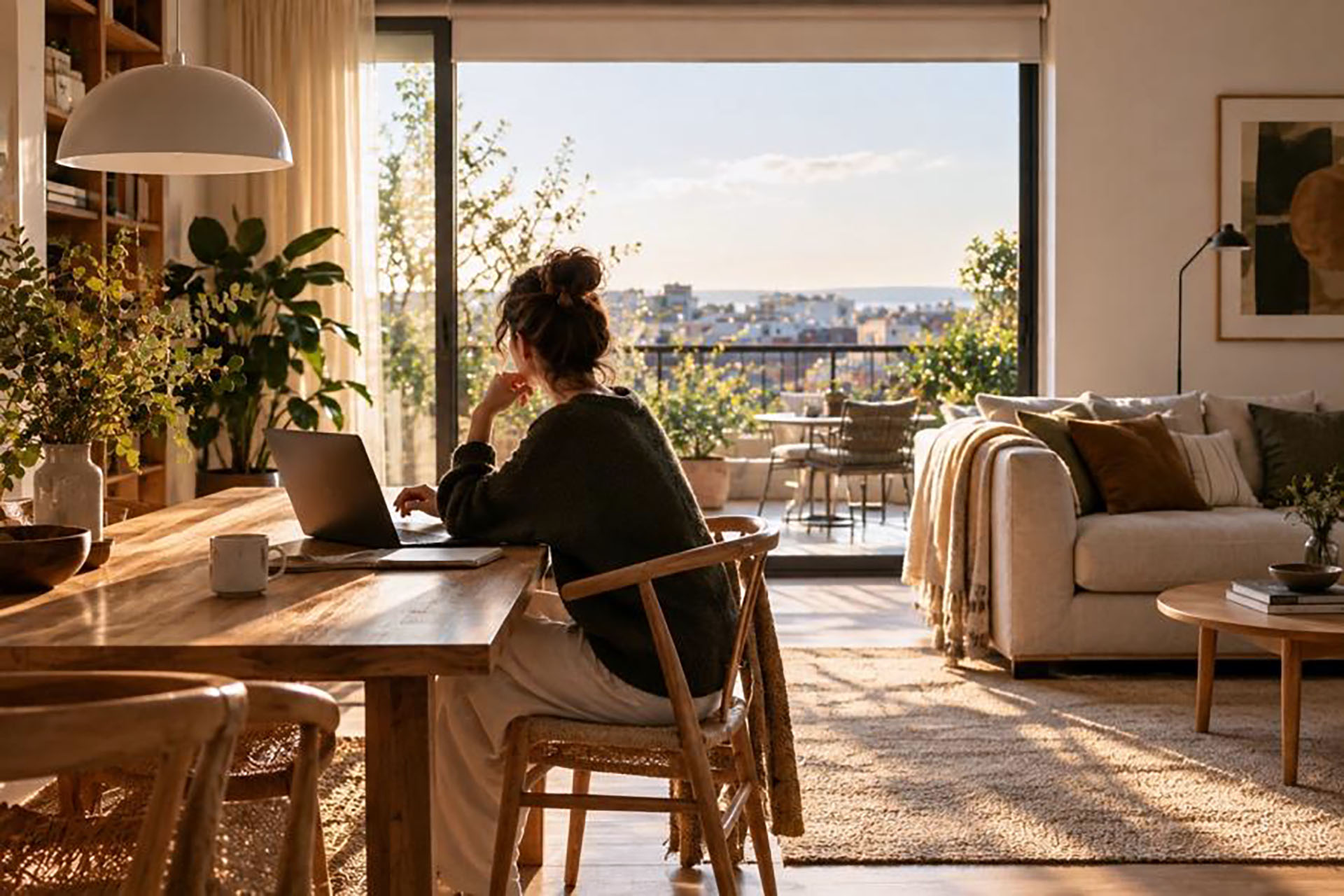
For first-time buyers, the issue is not only the total price. It is also the shortage of small, well-designed homes in areas with public transport and services, homes that make it possible to start an independent life without relying on a second income. A well-planned 50 m² home can suit this stage of life better than a larger one far from everything.
Smaller families, less linear lives
The family around the Christmas table rarely matches the model that shaped much of residential construction in recent decades: a couple with two or three children. The 2021 Census shows that almost one in four households in Portugal (24.8%) consists of a single person. In the Lisbon Metropolitan Area, the share rises to 28.2%. The most common household type is two people, at 33.3%. Households of four or more people became less common over the decade.
Behind these numbers are very different life paths. There are couples without children, by choice or by postponement. There are single-parent families. There are separated parents who need an extra bedroom only a few days a month. There are people who live alone at 35 and others who begin living alone at 75.
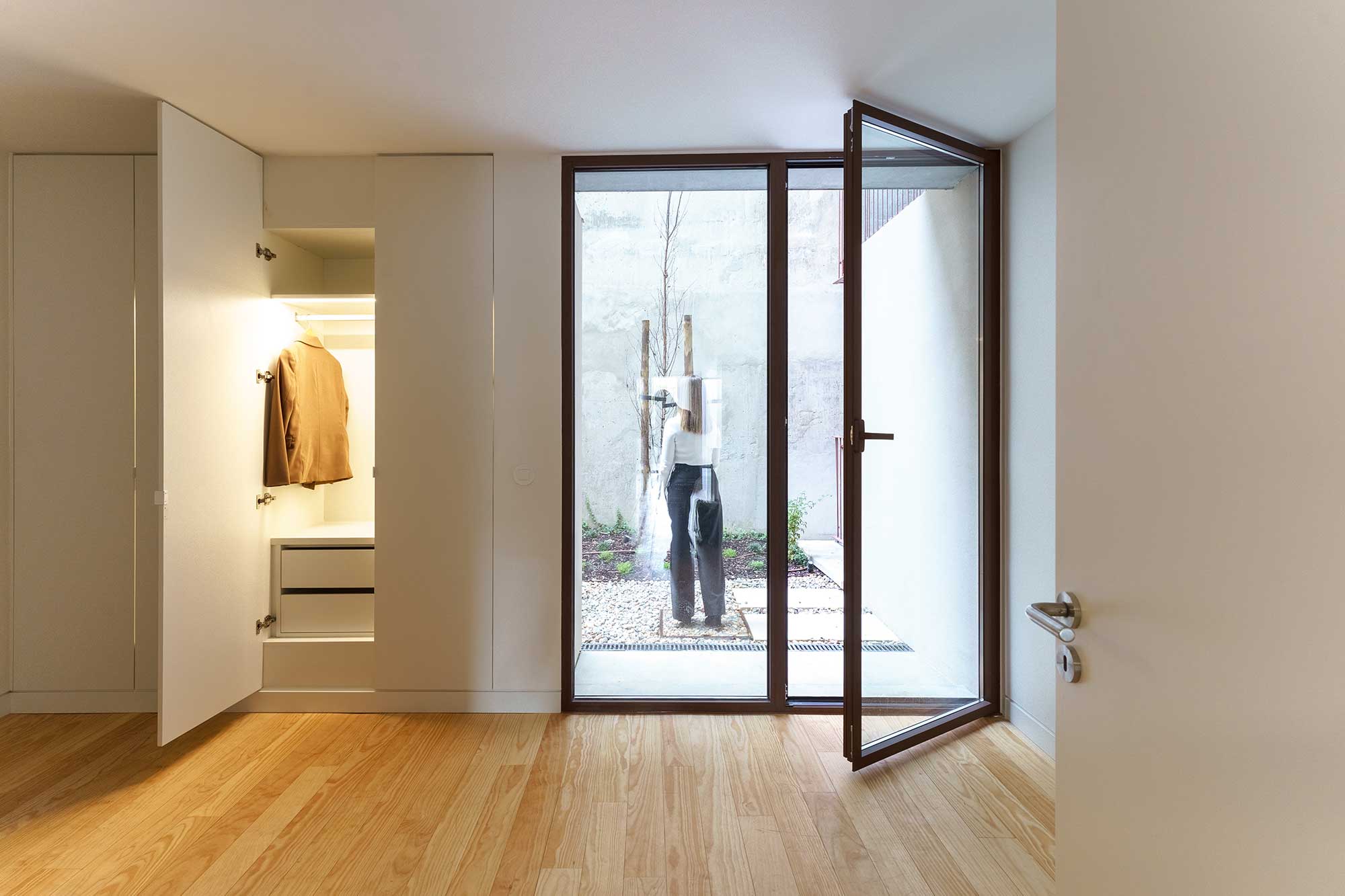
Each of these situations calls for a different home. More than total floor area, what matters is how the space is organised: a room that serves as an office during the week and as a children’s bedroom at weekends, a living room that works for two people and for ten, a kitchen designed for everyday life and not only for special occasions.
The home that became too big
At the other end of the table sit the grandparents. Many have lived in the same home for 30 or 40 years. It is where they raised their children, and it is where the family still gathers at Christmas. For the rest of the year, however, the house has empty bedrooms, stairs that are hard to climb and maintenance costs that weigh on a pension.
An ageing population makes this situation more and more common. It also raises a question that rarely enters the housing debate: where do people move if they want a smaller, more accessible home closer to services, without leaving the neighbourhood where they have built their lives?
In Portugal, residential mobility among older people is low. This is partly for emotional reasons, but also because there are few smaller, step-free homes in established urban areas. When such a move is possible, the effect goes beyond those who move: a family home returns to the market and can serve a new generation.
Building for every seat at the table
Portugal needs more housing. But the Christmas table shows that quantity alone is not enough. The young adult looking for a first home, the childless couple, the separated father and the grandparents who want a smaller home are not looking for the same product, and a supply designed for a single profile leaves everyone else out.
Meeting this diversity means offering a mix of home types within the same building and designing homes that can adapt to different stages of life. It also means valuing proximity to transport, shops and services, which matters differently depending on each household’s age and composition. And it means seeing the neighbourhood as part of the answer: it is there that generations meet, beyond Christmas.
Perhaps the best question for anyone who plans, develops or builds housing is a simple one: how many of the people sitting at our table would find a home that fits their life today?