- Details
- Category: Insights
Back home: what has changed in how we value the spaces we live in?
What we look for in a home is changing. Discover how flexibility, comfort, efficiency and functionality are transforming the choices we make about where we live.
With the arrival of autumn, routines return. Days become more predictable, we spend more time indoors, and the spaces where we live once again take on a central role in everyday life. It is also at this time of year that it becomes clearer whether a home truly responds to the way we live.
In recent years, our relationship with housing has changed. Home is no longer just the place where we start and end the day. For many people, it is an office, a place to rest, a place to socialise, a study area and even a space to exercise. This multiplication of functions has brought new demands and shifted some of the characteristics we value most when looking for a home.
Spaces that adapt to different moments
The idea that each room should have one very specific function is losing ground. Today, flexibility is one of the most important characteristics of a living space.
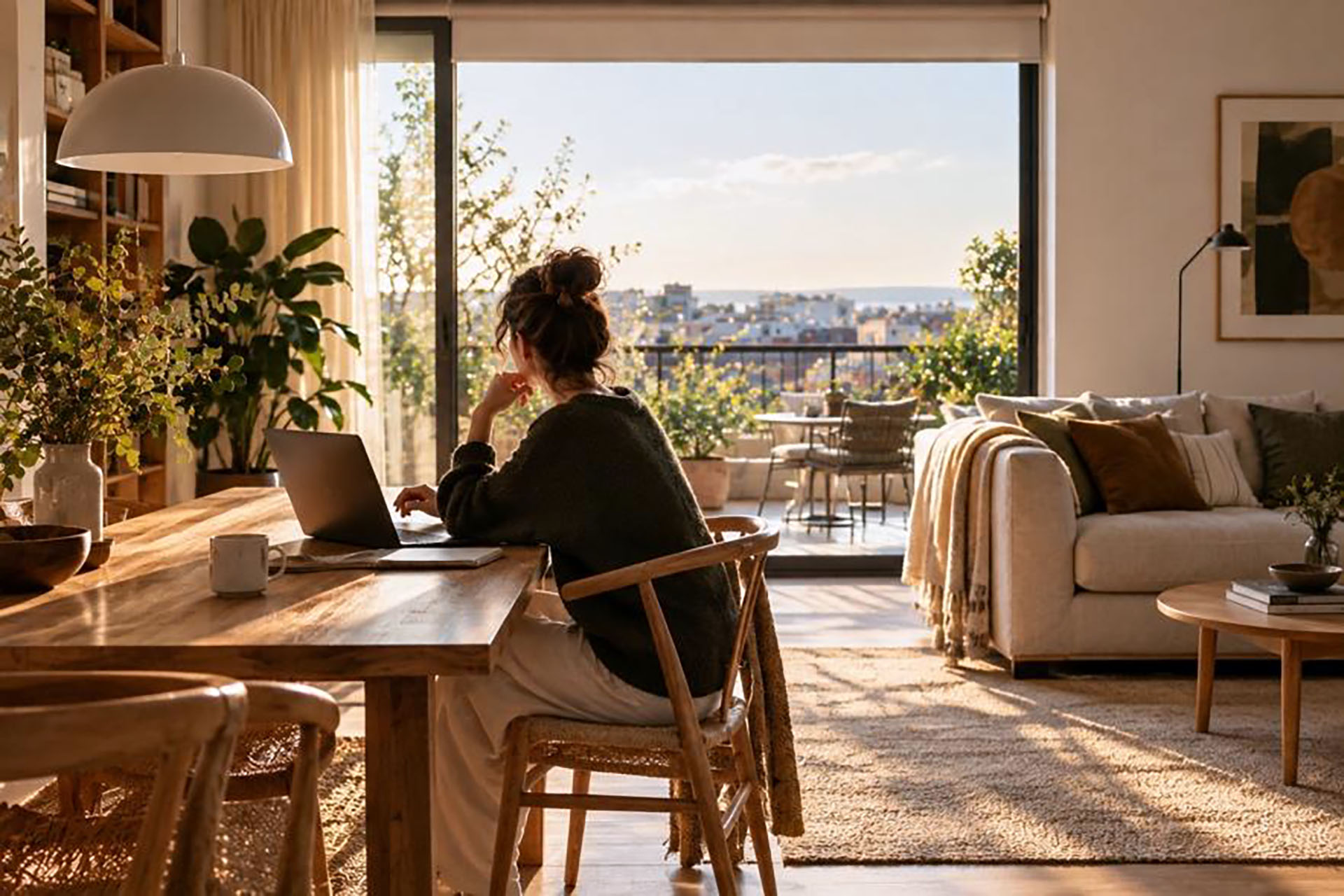
A living room can be a workspace in the morning and become a place to socialise by the end of the day. A bedroom may need to accommodate a desk or a study area. An extra room can serve as an office today and take on a different use in the future.
More than having more rooms, what increasingly matters is whether spaces can keep pace with different life stages and needs. A well-designed home is not necessarily one with a defined use for every square metre, but one that allows different ways of occupying that space.
The importance of being close to the outdoors
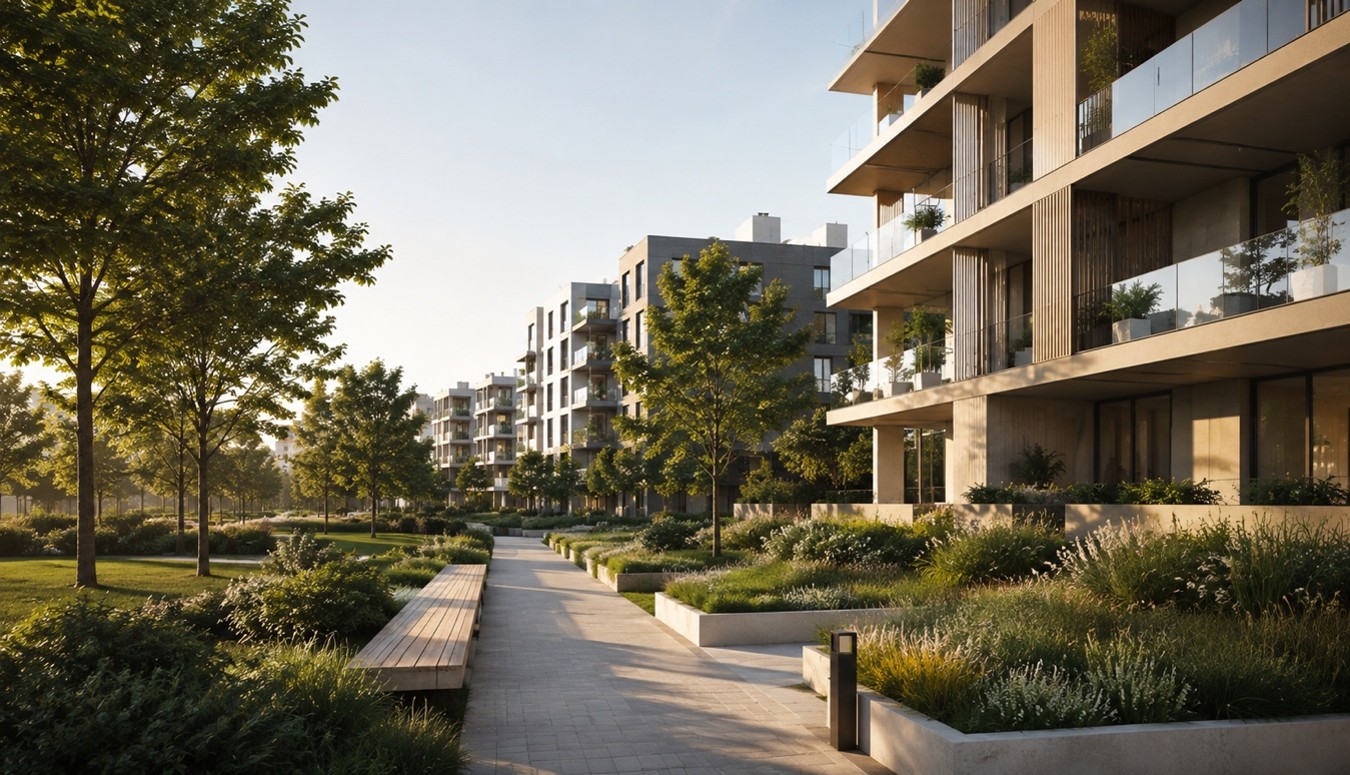
Spending more time at home has also made the value of the relationship between indoor and outdoor spaces more apparent. Balconies, terraces, gardens and other outdoor areas have gained new relevance, but the question goes beyond simply having outdoor space.
Natural light, ventilation and the possibility of building a closer relationship with the outdoors all contribute to the daily experience of living in a space. Small differences in sun exposure or in how a home is laid out can have a significant impact on how it is used throughout the day.
In an urban context, where space is naturally more limited, this relationship between indoors and outdoors can take on even greater importance.
Comfort also means efficiency
The comfort of a home can no longer be separated from its efficiency. Insulation, sun exposure, the quality of materials and solutions that help maintain an appropriate temperature throughout the year all influence both the experience of those who live in the space and their running costs.
This concern is particularly relevant in a context where energy efficiency is no longer just an environmental issue but has become part of everyday decisions. An efficient home can mean greater comfort, less waste and a more balanced use of resources.
Fewer square metres, more functionality
When looking for a home, floor area remains one of the first points of comparison. But square metres alone say little about the quality of a space.
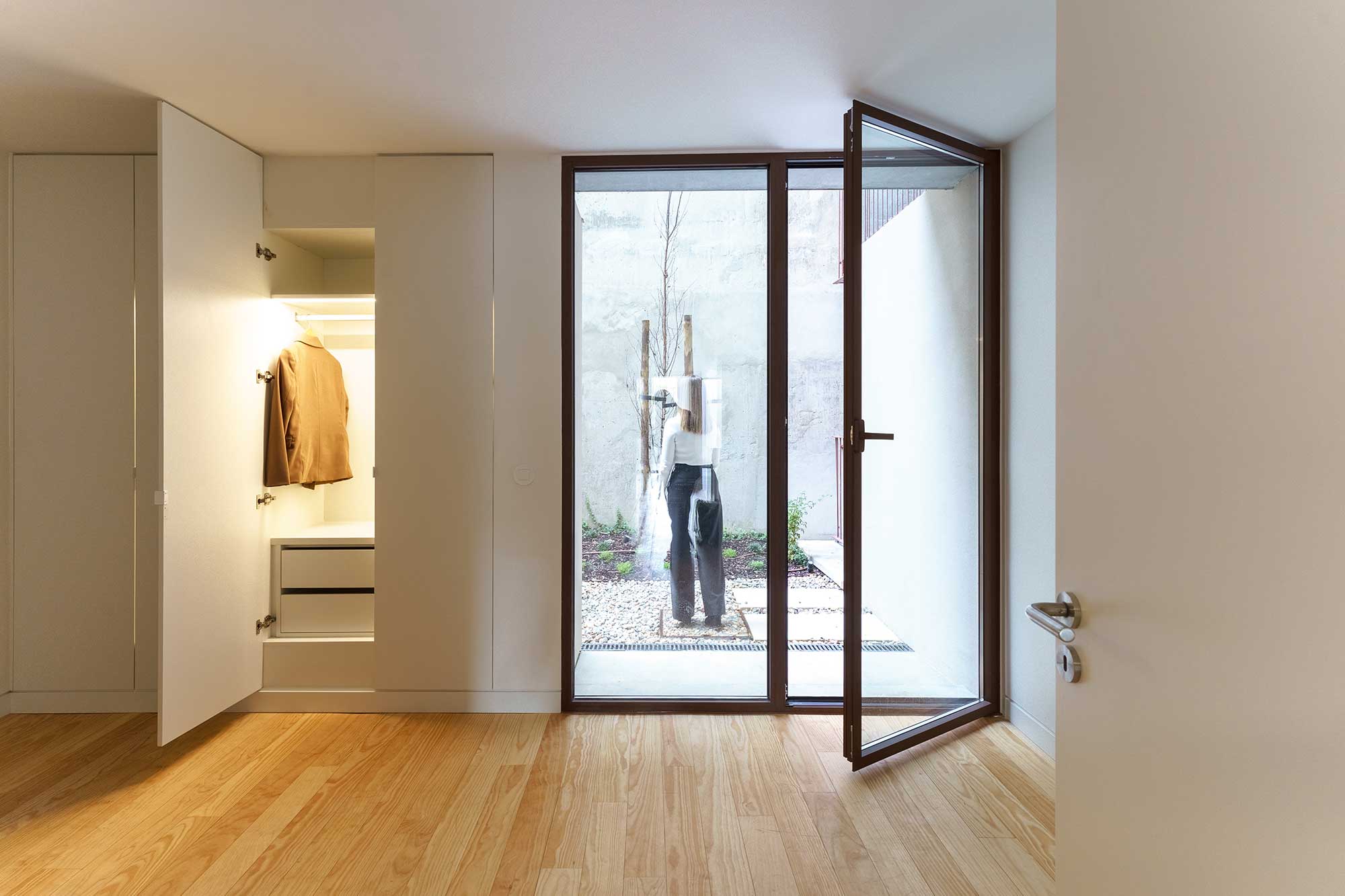
How a home organises its areas, whether it has sufficient storage, how the different rooms relate to one another, or whether a given space can be adapted to the needs of those who live there can matter as much as total size.
It is a shift in perspective: rather than simply asking how much space there is, it increasingly makes sense to ask how that space can be used.
A home that keeps pace with a way of life
Ultimately, all these changes point in the same direction. People are increasingly looking for homes that can keep pace with their lives, rather than having to adapt their lives to their homes.
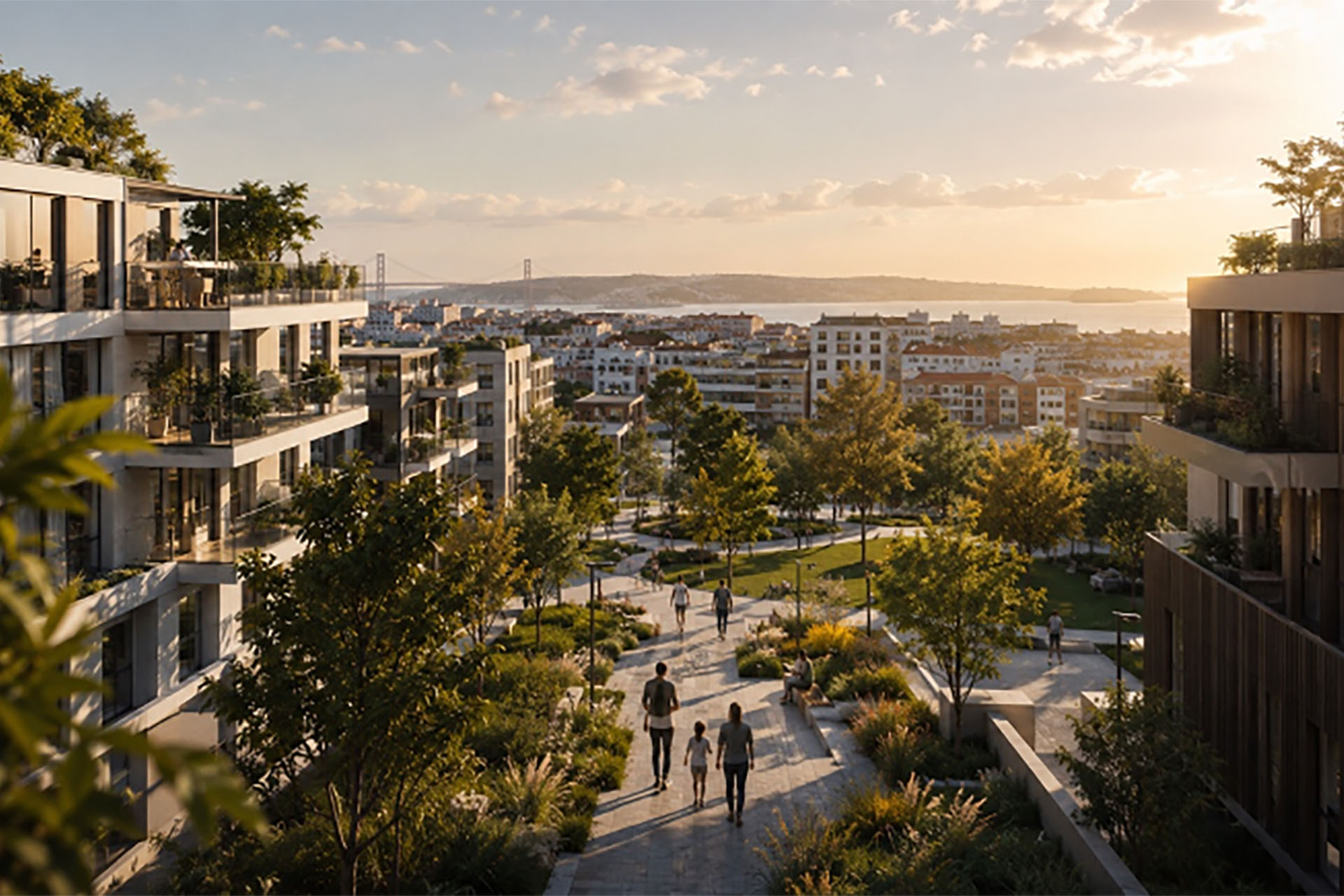
That means thinking about housing in a broader way. Not only the characteristics of the property itself, but also its location, proximity to services, mobility, communal spaces and its relationship with the surrounding area.
A good home is therefore increasingly difficult to define through floor area, number of bedrooms or a list of features alone. It is the combination of space, comfort, functionality and context that determines how a place will actually be lived in.
Back home, but with new expectations
The return to routine also brings an opportunity to look again at the spaces where we live. After a summer spent more time away from home, we understand more clearly what we missed and what we value in everyday life.
Housing is following this shift. Today, we expect a home to be comfortable, functional and efficient, but also flexible enough to respond to different moments in life.
More than an address, home has become an extension of our everyday lives. And this is precisely why choices in housing are increasingly less about the size of a space and more about how well that space can keep pace with the people who live in it.