- Details
- Category: Insights
Housing and Demographics: Are We Building for Tomorrow’s Needs?
How can demographic changes transform housing in Portugal? Discover the challenges and trends that should shape the homes and cities of the future.
For many years, discussing housing needs meant, above all, talking about population growth and the number of homes available. Today, the reality is far more complex. It is not just the number of people that is changing. The way we live, form families, work and even the length of time we stay in the same home is changing too.
Portugal currently faces a clear need to increase its housing supply. But given that today’s investment will have an impact on cities for decades to come, another question needs to be asked: are we building solely to meet current demand, or are we also considering the needs of those who will live in our cities in the future?
Smaller households, different needs
One of the main demographic shifts of recent decades relates to household size. More people are living alone, there are more couples without children, single-parent families and different household structures that no longer necessarily correspond to the traditional model for which much of the existing housing stock was designed.
At the same time, Portugal is one of the European countries where population ageing is particularly significant. This reality places new demands on housing, from building accessibility to proximity to services, shops, public transport, green spaces and healthcare facilities.
The challenge, therefore, is to ensure a sufficiently diverse housing supply that can accommodate different stages of life and lifestyles. Smaller homes may suit certain profiles, while other households will continue to need larger properties. Rather than prioritising a single solution, it will be necessary to create a market capable of offering different responses.
A home no longer serves just one purpose
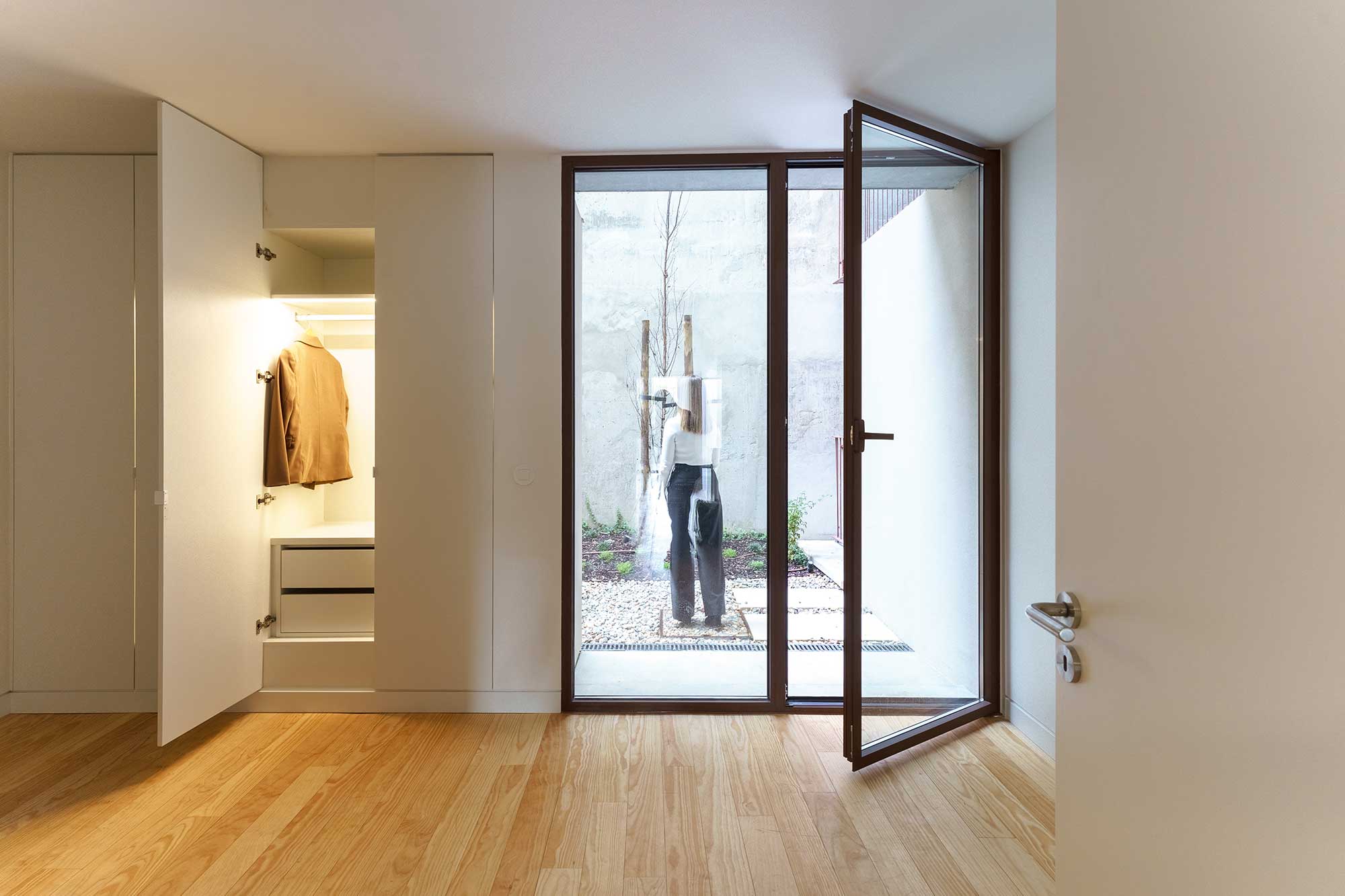
Our relationship with our homes has also changed. The rise of hybrid working has shown how a home may need to serve several different purposes throughout the same day. It is a place to rest and spend time with others, but it can also be a place to work, study or provide care.
This does not necessarily mean building larger homes. It means designing spaces more effectively.
Flexibility may become one of the most important factors in the housing of the future. Floor plans that can accommodate different uses, communal areas that complement private spaces, and solutions that allow homes to adapt to different stages of life can contribute to buildings with greater longevity and adaptability.
A home designed today will probably have several different occupants over the coming decades. And each of them may have very different needs.
Building housing also means building cities
Demographic change should not, however, be considered solely at the scale of individual buildings. Location and the surrounding environment are equally important.
For an ageing population, for example, proximity becomes increasingly important. Being able to walk to essential services, use public transport or access leisure and social spaces can make a significant difference to people’s independence and quality of life.
The same applies to younger families, who need to balance housing with employment, schools, shops and mobility. A home can hardly be considered in isolation from the city in which it is located.
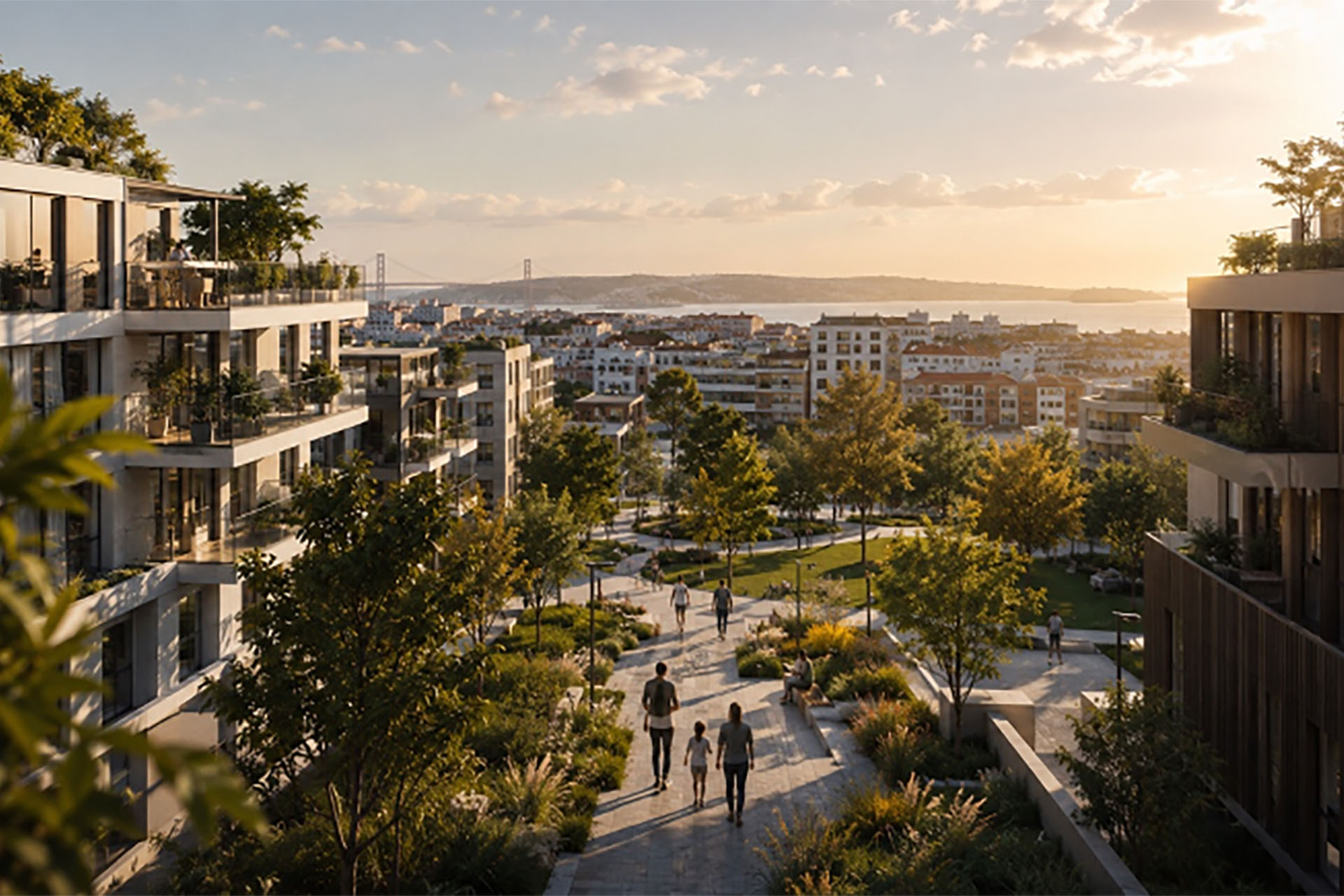
It is in this context that concepts such as proximity-based neighbourhoods, mixed-use developments and urban regeneration become increasingly relevant. Meeting housing needs is not only about how many homes are built, but also where they are built and how they relate to the surrounding area.
Thinking beyond immediate demand
The current imbalance between supply and demand makes it urgent to accelerate housing construction in Portugal. But urgency should not come at the expense of a long-term vision.
The real estate projects being developed today will still be part of our cities in 2040, 2050 and beyond. Anticipating demographic and social changes can help create developments that are better prepared to remain relevant over time.
For developers, architects, municipalities and other stakeholders in the sector, this ability to anticipate change will become increasingly important. Understanding who is looking for a home today remains essential. Understanding who may need one tomorrow will be just as important.
Because addressing the housing challenge is not simply about building more. It is about ensuring that what we build today continues to make sense for the people and cities of tomorrow.